• Home
  • Alcor
  • Cryonics Magazine
  • Facebook
  • RSS

Posts in category Patient Care

Records Broken by Recent Cases

Sep14
2011
Written by admin

Alcor’s last two cases were landmark cases.  A-2357, a case performed by Alcor’s Arizona team outside of Phoenix in June, reached a temperature of +20 degrees Celsius only 50 minutes after pronouncement of legal death.  This beat by several minutes the previous record for the fastest cooling to that temperature, a record that has stood for 21 years since case A-1049 in the year 1990. Cooling rate is important during stabilization of cryonics patients because it protects the brain from injuring itself after being subjected to a few minutes of stopped blood circulation while legal death pronounced, and from further injury that can occur if blood flow and oxygenation during subsequent chest compressions are inadequate. The cooling rate was enhanced for case A-2357 by Alcor’s newly-redesigned Surface Convection Cooling Device (SCCD), more popularly known as a SQUID.  Alcor congratulates Aaron Drake and his team.

A-2091, an Alcor case in Southern California in August where stabilization and transport were performed by Suspended Animation, Inc. (SA), reached +20 degrees Celsius in 55 minutes.  What made this case unique was how this cooling was achieved.  This was the first cryonics case in which a board certified cardiothoracic surgeon performed the field surgery to place the patient on cardiopulmonary bypass.  (This is a process in which cooled blood washout solution from a heart-lung machine is circulated through femoral vessels in the leg.)  With the assistance of a certified clinical perfusionist working with the surgeon, the patient was successfully placed on bypass only 15 minutes after pronouncement.  This is a new record for establishment of bypass for cryonics cases.  The patient’s temperature was reduced below +10 degC 67 minutes after pronouncement, also a new cryonics record.  Alcor congratulates SA team leader Catherine Baldwin and her team, and looks forward to further collaboration with SA to achieve such excellence in cryonics casework.

Posted in Cryopreservations

Alcor Patient Care Trust Assets

Jun11
2009
Written by admin

As of April 30, 2009, the Alcor Patient Care Trust Fund has assets of
3.05 million dollars, invested as follows:

* The Patient Care Trust owns just over 75% of the shares in
Cryonics Properties, LLC, the limited liability company that owns the
Alcor building (all other shares are owned by Alcor members). These
shares (representing the Trust’s equity in the Alcor building) are
valued at approximately $470,000 based on the original purchase price
of the building (they would be higher at current market value). The
Trust also owns the mortgage on the building, valued at about
$280,000. Alcor pays rent to Cryonics Properties, LLC. Since Alcor
does not occupy the entire building, there are additional tenants who
also pay rent, which provides some additional income for the Patient
Care Trust.

* Capital equipment (primarily dewars) and leasehold improvements
(capital improvements to the Patient Care Bay) valued at
approximately $610,000. These are carried on the books and subject to
depreciation, but are not assets that would be liquidated.

* A cash account in which income (other than investment account
income) is placed, expenses are disbursed, and money is transferred
to the investment account. On the above date it contained about
$200,000 but generally contains on the order of $100,000. In
addition, on the above date the Accounts Receivable totaled $70,000.

* An investment account held at the firm of Morgan Stanley,
containing about $1.42 million. Thus far, no withdrawals from this
account have ever been made.

The balance and investment summary of the Patient Care Trust Morgan
Stanley Investment Account is now being posted monthly on the Alcor
website.

To read more, click here: http://www.alcor.org/AboutAlcor/patientcaretrustfund.html

How is the Alcor Patient Care Trust weathering the economic downturn?

Jan08
2009
Written by admin

The Alcor Patient Care Trust (PCT) was under the active management of
Morgan Stanley advisors and was protected from some of the market
drop. The SP500 lost approximately 38% of its value in 2008 while the
Alcor PCT lost approximately 23% of its value in 2008. Despite this
clear over-performance in 2008, the PCT Board was not satisfied with
the absolute drop in the PCT.

Therefore, we have taken the following steps for 2009:

(a) added a new PCT Board member, with extensive
investing experience, to help set up a long term management program for the PCT;

(b) significantly reduced our market exposure while still expecting reasonable returns in the future;

(c) made the decision to regularly publish information about the PCT performance on the Alcor web site as soon as our volunteers complete the reporting.

Dewar Maintenance

Apr29
2008
Written by admin

In order to pump down two Bigfoot dewars simultaneously, we purchased a second vacuum pump and the other necessary components. Since we tend to order dewars by the pair, doing this will save us about three months getting the dewars ready for patients after a new purchase.

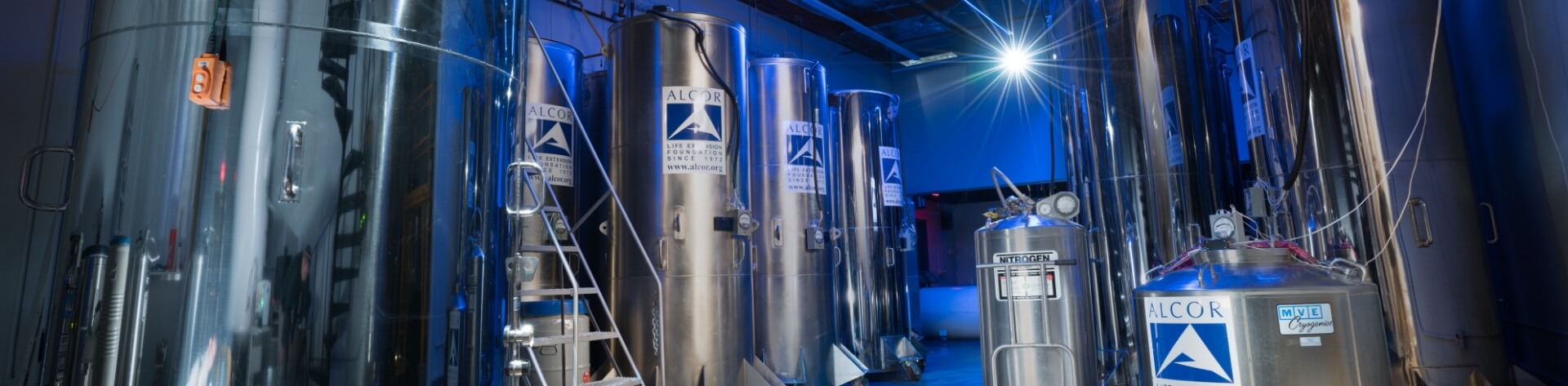
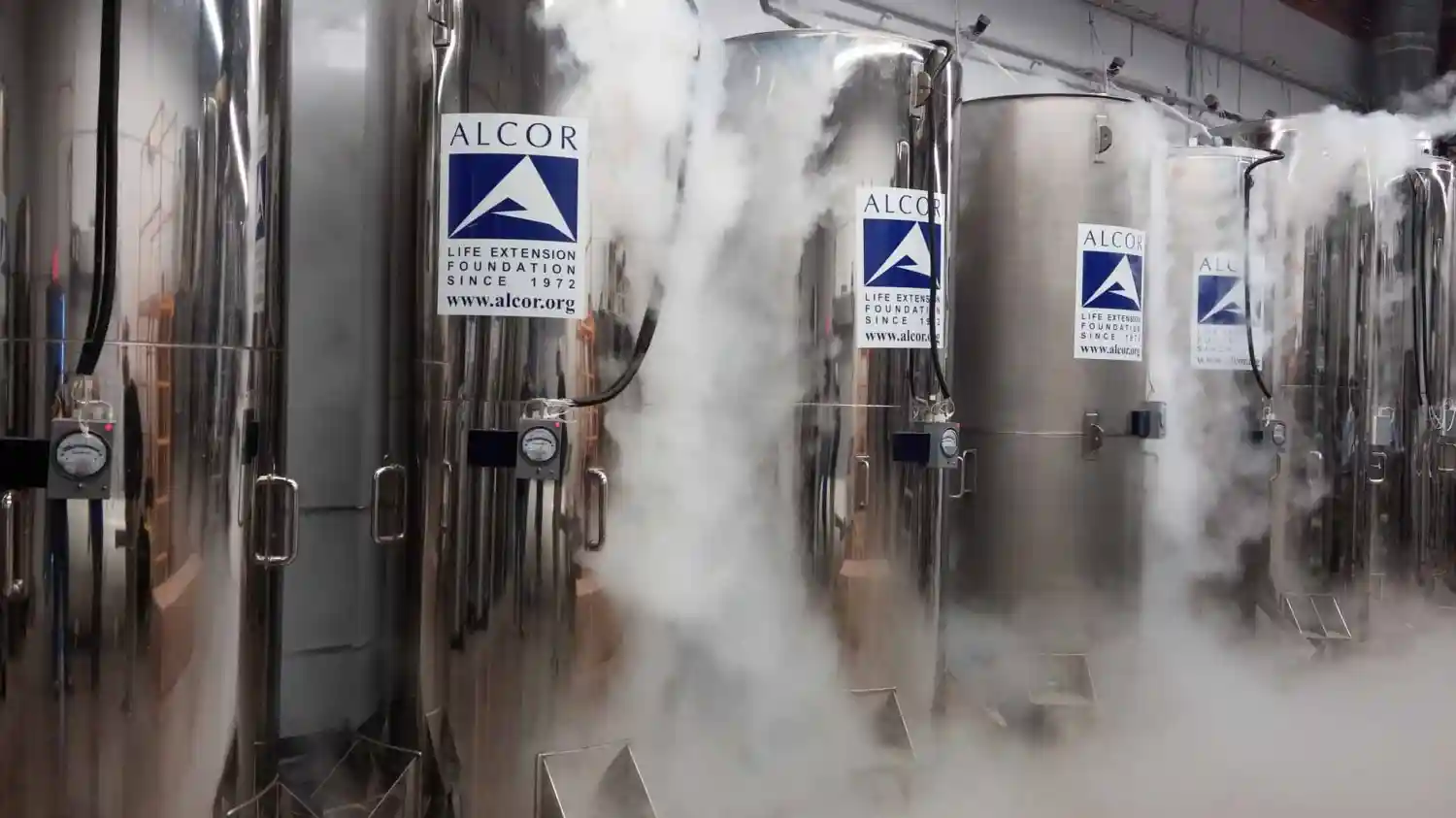
Recently, while testing the boil-off rate of liquid nitrogen from Bigfoot-1, we took the opportunity to gather more data on the temperature differential between the bottom and top of the dewar, should nitrogen supplies be discontinued. (The dewars boil off between ½ and ¾ inches per day, on average.) There was a 5 degree difference between the boiling point of liquid nitrogen and the top of the pod. At the same time, there was a temperature difference of 40 degrees between the top of the pod and the bottom of the dewar’s lid.

Engineer Hugh Hixon estimates that when the last drop of liquid nitrogen evaporated, the temperature at the top of the pod would be no warmer than -180 degrees C. These excellent results are largely because of the conductive nature of the pods themselves, which are made of aluminum.

If we were to lose access to liquid nitrogen, it would take more than 90 days to boil off all the nitrogen. The more efficient dewars would go significantly longer.

Cryopreservation and Related Cases

Nov15
2007
Written by admin

One pet cryopreservation was performed on a member’s beloved cat in October. Alcor now has 33 pets in its care.

An elderly, long-time member in California suffered a pair of apparent seizures recently. He was briefly hospitalized and released after a period of overnight observation. After additional tests were completed, Alcor personnel visited this member in San Diego to assess his condition. The member continues to be cared for by a close relative and Alcor will monitor his condition through close contact.

Probate Matters: The A-1097 probate is nearing conclusion, and the executor is preparing to close the estate, now that all taxes are filed and paid. Alcor has been reimbursed for the renovations made to this patient’s property, which was bequeathed to Alcor and is on the market in California.

Posted in Announcements

Patient Care

Nov06
2006
Written by admin

edited 11-7-06 to improve clarity
We have completed the boil-off testing for the last of our new dewars (Bigfoot #12). Though this dewar is operating at a slightly higher efficiency that the previous two, it is boiling off about 16.7 liters per day. This is nearly twice the rate of our best performer, Bigfoot #9, which consumes just over 9 liters per day. We’re discussing the return of the new dewars for repair with the manufacturer, but will likely engage in some troubleshooting before they are sequentially returned.

We have arranged to purchase a plasma cutter for the patient care area. This tool will give the necessary equipment to rescue our patients, in case of a catastrophic dewar failure. It has been a slight concern that if one of the dewars imploded as the result of a vacuum failure, we’d have no way to rapidly extract the patients. Once this device arrives, we will have that capacity.

No resolution has yet been seen with the former liquid nitrogen supplier, Matheson Tri-Gas. It became apparent during a regular review some weeks ago that they had been charging us rental fees for storage dewars we did not have. They agreed to audit their records, but we have been unable to get any real numbers from them. Because of their lack of response, Tanya Jones personally audited our delivery records back through January 2004. What she learned is that the billing discrepancies were not a new problem. There was a net difference of 26 nitrogen dewars of various sizes (160 liter, 180 liter, 230 liter and 255 liter) for which we were consistently over-billed.

The next step is to compare her totals to the actual invoices, keeping in mind the discrepancies that were already in place at the beginning of 2004, and attempt to reach a settlement with Tri-Gas.

Patients Moved Well

Apr21
2006
Written by admin

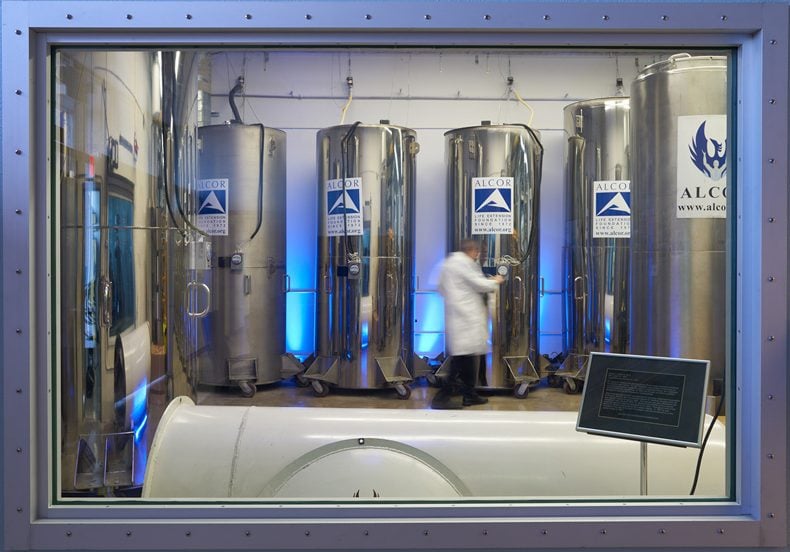
Okay, maybe the patients themselves didn’t move so well, but the staff and the hired crane and forklift operators moved them nicely. As mentioned also in a brief Alcor United post, “no dewars were dropped, dinged, banged or otherwise harmed” in the changing of locations. The old patient care bay is holding the two single-person cool-down dewars, a -140 degree C freezer, and a metal cabinet for wrenches and gloves and such. The new patient care bay seems a lot more full now, with all the dewars nicely in a row. (We have pictures that I hope to see posted soon.)

That old care bay will now become a consolidated filing and supplies room; the old cool-down bay will become our training area; and the freezer will be decommissioned for a while, but will eventually move into the research area for exploring higher temperature patient care alternatives.

We’re extremely happy to see this step done, as it finally means we’re nearing the end of the on-going construction. Moving the patients has launched a cascade of physical tasks that must now be done. Moving boxes, people, equipment; reorganizing each space; pitching and tossing where possible…. Call me silly, but I’m excited.

Tomorrow

Apr18
2006
Written by admin

Tomorrow is the day. We’ve been waiting for over a year. Tomorrow we move the patients.

The construction isn’t done. As everybody already knows, we’ve been involved in a dispute with the construction company over the completion of this project. They basically abondoned it for a long while last year, during a time that we had more intense concerns than riding herd on languishing construction people. Unfortunately during that time, the construction company became over-extended and suffered serious critical personnel injury. Once we turned our attention back to that painfully-late project, it was too late to save it gracefully. Instead, it has been frustrating. (We’re still trying to finish, but it finally won’t be much longer.)

The liquid nitrogen plumbing isn’t quite done. We will not have automated fills of the dewars for at least a week after the patients move. We’ve been pulling our entire nitrogen supply off the bulk tank since it was filled last week, but we still haven’t pulled enough to replace the broken valve. Hugh, as the critical individual on this project, has decided his annual-and-only vacation at the Space Access conference is more important. We’ll have to fill the dewars manually (as they need it), and Hugh will be involved with all of them until the plumbing is complete.

If there is a critical juncture in this move, it’s in the fact that the plan involves using a crane to pick the dewars up and swing them around to the new space (lifting only a few inches off the ground). We know we can roll them and all the wheels are greased, so we just have to put them in reach of the crane. We’ll be testing the lifting lugs, and on some dewars that are more than a decade old. The patients are safely submerged in liquid nitrogen, but we’ve been boiling off the uppermost layers to reduce the weight of the units. That will reduce the load on the lugs somewhat.

We’ve never had any of these dewars fail (or fall) with patients inside; but like the delicate move from California, this move is fraught with the potential for disaster.

We believe it will be fine and that all will be well and the new space seem used after so long unfinished. But there’s that niggling doubt, that concern for defenseless things, furry or otherwise, that this could go horribly wrong.

We have tried to engineer this move for safety. Hiring professionals to do the heavy lifting, instead of rolling dewars by hand along the heavily sloped parking lot… that was for patient and staff safety. We have installed a new hoist, that will simplify the moving of patients, if a dewar should suffer a leak. We weren’t able to obtain a plasma cutter in time for the move, and that may become a time-sensitive issue if one of the dewars impacts. (We have cutting tools, of course, but they would take longer in extracting the patients than the beam would.) We do have a spare dewar and enough liquid nitrogen to fill it and the means to do so quickly.

We have also tried to engineer it for speed. We don’t want the bays to be split any longer than they have to, and we don’t want to have to do this two days in a row. The plan is good. The plan should work.

Betty Bulk Tank’s first fill

Apr13
2006
Written by admin

Today we took a major step in improving patient care, in that we filled our new 900-gallon bulk tank for the first time. This poor tank had been neglected for several years for several years before we spotted it on the web; it had even been exposed to the elements since before our purchase in July, 2003. When we finally rescued it in November, 2005, it had rust spots, broken valves, and a large layer of dust.

Betty cost $12k when newly-used and can hold 900 gallons. She cost more than $3k for shipping and off-loading, and $2500 for repair and restoration. When new, these tanks go for $45k, not including shipping/off-loading. We like the price, and we like the added comfort of additional nitrogen on-site.

Hugh Hixon has been working hard to restore it to operational status. He changed the vacuum valve and modified the tank to accommodate nitrogen (originally configured for oxygen); and though we’re still working on plumbing the patient care bay for the patients, we decided it was time to partially fill the tank. I won’t comment on how we watched the wrong gauge, and filled nearly-full as opposed to part-way. …

We were only certain she was ready to fill, because Hugh had been testing — and fixing — the vacuum for many weeks. The first thing he did when it landed on the doorstep was apply a vacuum gauge and pump. Checking the vacuum pressure and the quality of the insulation were the quickest way to establish how much the refurbish would cost us.

At first, the vacuum gauge read more than we would have liked. We measured over 40 microns of gas pressure. Using a vacuum pump, we tested the insulation. That +40 micron measurement was not sustained as we continued to pump. Once the reading was below 1 micron, we stopped the pump and checked to see how the pressure responded. It rose, but with ever smaller slopes. If the vacuum has risen with consistent slope, we would have known that it was a leak, even if it was a slow leak. That this slope declined in steepness indicated a different problem.

The “getter”, a chemically-reactive lining in the vacuum that resembles kitty litter, has collected too much gas over the years and was releasing those bubbles into the vacuum. With each declining slope, we were seeing improvement in the filter these tanks have. Isolating the problem to this saturated filter was a good thing. It got better.
We waited to order a fill until the getter seemed appropriately out-gassed. And we decided to test fill.

Today’s fill was not without incident. Hugh and the nitrogen-supplier technician (an all-around useful cryotech guy) were both on hand to supervise the fill. One valve needed immediate replacing. That was accomplished with supplies on-hand. We also discovered a minor problem with a threaded valve. Replacing this valve requires we drain the tank, and we’ll be filling our portable dewars for some time to come. All nitrogen level maintenance will be done off the new tank until it’s low enough to replace the damaged valve.

Before people panic, this bulk storage tank has already been measured at better-than-industry standards of holding a vacuum of 4 microns for more than 24 hours. We’ll fix the valve, and more nitrogen will be available to the patients on demand.

All told, this project has cost us $12k, +$3k for shipping and off-loading, and $2500 for repair and restoration. Restoration is still on-going, insofar as it needs a fresh coat of paint. This will be done soon, and the patients will be moved in a week; bulk tank ready or not.

Posted in Research & Development

Recent Posts

  • 40 Scholarships Available to Teens & Twenties 5 2014
  • Resuscitation and Reintegration of Cryonics Patients Symposium in Portland Oregon
  • Bring in a new member and we will credit your membership dues
  • Alcor director Michael Seidl steps down
  • Alcor’s 117th Patient

RSS Cryonics Magazine

  • Cryonics March 2013
  • The Past, Present, and Future of Alcor Membership Dues
  • Reversible Cryonics
  • Cryonics February 2013
  • Does Aging Stop?
  • Consciousness, Natural Selection, and Knowledge
  • Cryonics January 2013
  • Alcor-40 Conference Review
  • Chemical Brain Preservation and Human Suspended Animation
  • Cryonics November-December 2012

Categories

  • Announcements
  • Cryobiology
  • Cryopreservations
  • Legal
  • Media
  • Membership
  • Nanotechnology
  • News & Events
  • Operations
  • Patient Care
  • Readiness & Deployment
  • Research & Development
  • Training

Archives

  • May 2013
  • April 2013
  • March 2013
  • January 2013
  • November 2012
  • October 2012
  • September 2012
  • August 2012
  • July 2012
  • June 2012
  • May 2012
  • April 2012
  • March 2012
  • February 2012
  • January 2012
  • December 2011
  • November 2011
  • October 2011
  • September 2011
  • August 2011
  • July 2011
  • June 2011
  • May 2011
  • April 2011
  • March 2011
  • February 2011
  • January 2011
  • December 2010
  • November 2010
  • October 2010
  • September 2010
  • August 2010
  • July 2010
  • June 2010
  • May 2010
  • April 2010
  • March 2010
  • February 2010
  • January 2010
  • December 2009
  • November 2009
  • October 2009
  • September 2009
  • August 2009
  • July 2009
  • June 2009
  • May 2009
  • April 2009
  • March 2009
  • February 2009
  • January 2009
  • December 2008
  • November 2008
  • October 2008
  • September 2008
  • August 2008
  • July 2008
  • June 2008
  • May 2008
  • April 2008
  • March 2008
  • February 2008
  • January 2008
  • December 2007
  • November 2007
  • October 2007
  • September 2007
  • August 2007
  • July 2007
  • June 2007
  • May 2007
  • April 2007
  • March 2007
  • February 2007
  • January 2007
  • December 2006
  • November 2006
  • October 2006
  • September 2006
  • August 2006
  • July 2006
  • June 2006
  • May 2006
  • April 2006
  • March 2006

Meta

  • Log in
  • Entries RSS
  • Comments RSS
  • WordPress.org

EvoLve theme by Blogatize  •  Powered by WordPress Alcor News
News Blog of the Alcor Life Extension Foundation